
For many autistic people, the outside world is full of sensory demands: noise, unpredictability, bright lights, crowds, expectations, and constant processing. Home should be the opposite. It should be the place where the nervous system can finally exhale.
But too often, home environments are shaped by routines, aesthetics, or assumptions that don’t take sensory needs into account. A sensory-inclusive home isn’t about making everything silent, dark, or minimalist. It’s about creating a space that supports regulation, reduces unnecessary stress, and honours the way autistic people experience the world.
This blog explores how small, thoughtful changes at home can make a profound difference to wellbeing.
Why Sensory Comfort at Home Matters
“At home, sensory comfort supports emotional regulation and wellbeing.”
This is the foundation. A sensory-inclusive home isn’t a luxury — it’s a protective factor.
When the world outside is overwhelming, home becomes the place where the nervous system resets, masking can drop, shutdowns can be prevented, burnout can be reduced, and energy can be restored.
A home that supports sensory needs doesn’t just make life easier. It makes life sustainable.
Lighting: The First Sensory Adjustment Most People Overlook
Lighting is one of the biggest sensory triggers for autistic people — and one of the easiest to change.
What helps: soft, warm lighting; dimmable lamps; natural light where possible; avoiding harsh overhead lights; using blinds or curtains to control brightness.
Fluorescent lighting, flickering bulbs, or bright white LEDs can cause headaches, visual stress, or anxiety. Soft, adjustable lighting creates a calmer baseline for the whole home.
Noise: Reducing the Constant Sensory Load
Noise is one of the most common sources of sensory overload. At home, noise should be predictable and controllable.
Helpful strategies: soft furnishings to absorb sound; quiet zones or “retreat spaces”; noise-reducing curtains or rugs; avoiding constant background noise (TV, radio, appliances); offering headphones or ear defenders as needed.
A quiet home isn’t a silent home. It’s a home where noise doesn’t ambush you.
Creating a “Quiet Zone” or Recovery Space
Every autistic person benefits from having a space where they can decompress without judgement or interruption.
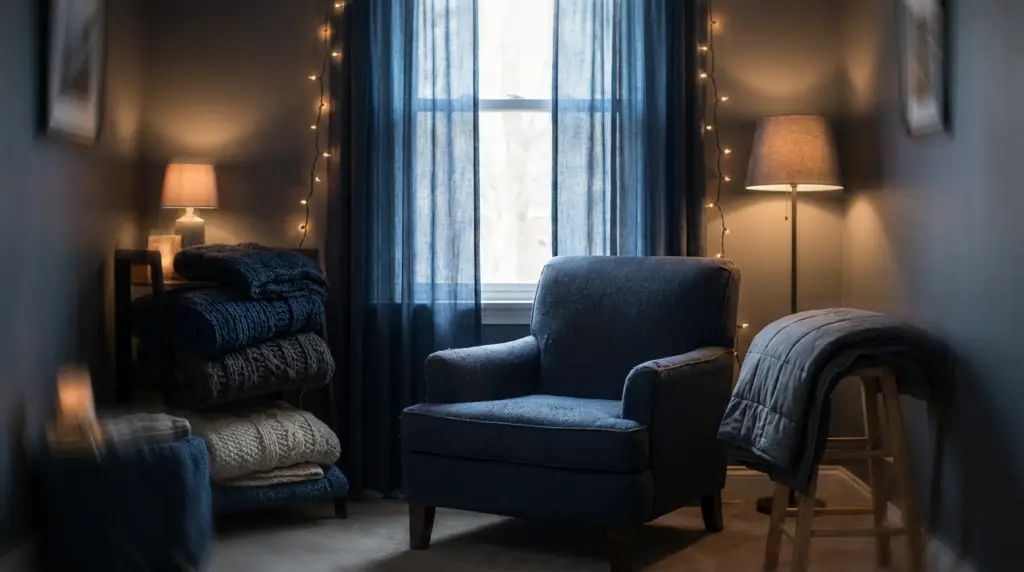
This space might include: soft lighting; weighted blankets; comfortable seating; minimal visual clutter; sensory tools; predictable routines; the ability to close a door.
This isn’t a “timeout” space. It’s a regulation space — a place to recover, not to be sent.
Textures, Clothing, and Comfort
Textures can make or break comfort at home. Consider: soft bedding; comfortable clothing; removing scratchy labels; choosing fabrics that feel safe and soothing; avoiding materials that cause irritation.
Comfort is not indulgence. Comfort is regulation.
Predictability: The Sensory Support Nobody Talks About
Predictability reduces cognitive load. It reduces anxiety. It reduces sensory overwhelm.
Predictability at home might look like: consistent routines; clear expectations; visual schedules; organised spaces; knowing what’s happening next.
Predictability doesn’t mean rigidity. It means reducing unnecessary surprises.
Personalisation: Because Every Autistic Person Is Different
“Every autistic person has unique sensory needs, so personalised adjustments are essential.”
There is no universal sensory-friendly home. There is only your sensory-friendly home.
Some people need movement. Some need stillness. Some need quiet. Some need background sound. Some need darkness. Some need bright, structured spaces. The key is choice. A sensory-inclusive home adapts to the person — not the other way around.
Small Changes, Big Impact
You don’t need a renovation budget to create a sensory-inclusive home. You need awareness, flexibility, and respect.
Small changes can transform daily life: a lamp instead of a ceiling light; a quiet corner instead of a busy room; a weighted blanket instead of a lecture about “calming down”; a predictable routine instead of constant change; a sensory retreat instead of punishment.
These changes don’t just support autistic people. They support families, relationships, and wellbeing.
The Home as a Sanctuary — Not Another Source of Stress
A sensory-inclusive home is not about perfection. It’s about safety. It’s about dignity. It’s about creating a space where autistic people can be themselves without apology.
When home becomes a place of recovery rather than another place to cope, everything else becomes more possible.
About Autism — led by autistic trainer and speaker Stephen Simpson. Championing lived experience, challenging assumptions, and creating environments where autistic people can genuinely thrive. www.aboutautism.co.uk